• Home
  • About
    • Author
    • Satsuma Biru
  • Categories
    • Travel
    • Culture
    • Live Hack
  • Countries
    • Australia
    • Indonesia
    • Japan
    • South Korea
  • Language
    • 日本語
    • English
    • Bahasa
  • Others
    • FAQ
    • miscellaneous
    • blog walking
linkedin facebook twitter instagram pinterest bloglovin Email

Satsuma Biru

Ikatlah Ilmu dengan Menuliskannya - Ali bin Abi Thalib -

Terinspirasi ikutan Jakarta Walking Tour (@jktgoodguide), sempat kepikiran untuk ikut kegiatan serupa di Yogyakarta buat muterin tempat-tempat sejarah yang mungkin kalo saya jalan sendiri nggak bakal tau what the story and history behind...  Tapi karena sampai H-sekian nggak ada balasan email (kayaknya rute Kotagede ini juga in high demand), jadinya ke sana ditemenin sama dua orang teman kerja yang notably orang asli Yogya..

Jalan-jalan ke Yogyakarta kali ini sambil tipis-tipis napak tilas sejarah di Kotagede. 

Kenapa tiba-tiba memutuskan ke sini? Jadi ceritanya waktu itu buat persiapan Tes Wawasan Kebangsaan (TWK) CPNS, saya malah terdistraksi nonton film Sultan Agung: Tahta, Perjuangan, Cinta (2018) di Netflix. Maksudnya biar nggak susah-susah baca buku sejarah, mending belajar sambil nonton aja hhehe.. Trus saat liat scene bagian pemakaman Sultan Agung di Kompleks Makam Imogiri, Bantul dan langsung terpikat sama undak-undakan di gapura pintu masuknya yang bagus banget menurut saya 😅. Setelah googling-googling, eh ternyata di Kotagede juga ada lho versi pertama dan lebih mini tapi nggak kalah sisi historisnya.

Sedikit pengantar, Kotagede mulanya adalah pusat Kerajaan Mataram Kuno (Hindu) yang kemudian dipindahkan ke Jawa Timur (konon salah satu alasannya akibat letusan gunung merapi yang dahsyat) sehingga wilayah ini berubah menjadi hutan lebat yang dikenal dengan nama Alas Mentaok. Beberapa abad kemudian, Alas Mentaok menjadi bagian dari wilayah Kesultanan Pajang yang dihadiahkan oleh Sultan Hadiwijaya (Sultan Pajang saat itu) kepada Ki Gede Pemanahan. Alas Mentaok ini kemudian dijadikan sebagai sebuah kadipaten kecil yang dinamai Mataram oleh Ki Gede Pemanahan yang kemudian kepemimpinannya dilanjutkan oleh Danang Sutawijaya (Dikenal juga dengan nama Senopati). Singkat cerita, Senopati menjadi Raja Kesultanan Mataram yang pertama bergelar Panembahan. Nah, Alas Mentaok yang tepatnya berada di daerah Kotagede saat ini dulunya pernah menjadi ibukota Kasultanan Mataram.

I remember the lullaby story of my father when I was 7 years old talked about the war between Jaka Tingkir (Sultan Hadiwijaya) versus Arya Penangsang.. With help from Ki Ageng Pamanahan, Ki Panjawi and Ki Juru Martani (known as the Three Musketeers of Mataram), they defeated Arya Penangsang.. In those war, Danang Sutawijaya (the son of Ki Ageng Pamanahan which also the adopted child of Sultan Hadiwijaya, which then would be known as Panembahan Senopati the first King of Mataram Sultanate) help his fathers.

Perjalanannya dimulai dari sini...

Jadi, menurut Dinas Kebudayaan Kota Yogyakarta, konsep tata kota/tata wilayah tradisional Jawa di Kotagede menerapkan empat elemen (catur gatra), yang terdiri dari rumah raja, pasar, alun-alun, dan masjid. Dari keempat elemen tersebut, yang masih dapat dilihat sampai sekarang hanya masjid (masjid Ageng) dan pasar Kotagede. 

Well,.. kali ini kita bakal jalan-jalan ke Masjid Gede Mataram dan kompleks pemakaman Raja-raja di Kotagede yang tepatnya berada di Sayangan, Jagalan, Kec. Banguntapan, Kab. Bantul, Yogyakarta. Untuk menuju ke sana, pengunjung dapat menggunakan Trans Yogya kemudian dilanjutkan dengan transportasi online menuju ke lokasi.

Area parkir bagi pengunjung yang membawa kendaraan pribadi

Tidak jauh dari pakiran, kita berjalan menyusuri sebuah gang kecil dengan gapura berarsitektur paduraksa (arsitektur Jawa & Bali kuno yang merupakan perpaduan Hindu-Buddha) pada bagian ujung jalan. Pertama-tama, kita tidak langsung masuk ke dalam gapura melainkan berjalan mengelilingi tembok luar dari kompleks masjid dan makam terlebih dahulu.

Gapura memasuki Masjid Gede dan area pemakaman

Dari luar kompleks ini kita bisa melihat tembok besar yang dibangun mengelilingi kompleks Masjid Gede dan Pemakaman, serta Sendang Kemuning yang berbaur dengan rumah penduduk. Dari tembok luar juga kita bisa melihat Sendang Kakung dan gapura masuknya.

Tembok di sekeliling kompleks Masjid Gede dan Makam

Sendang Kemuning

Gapura menuju ke Sendang Seliran tampak dari luar pagar

Setelah memutari pagar kompleks dari luar, saatnya kita memasuki gapura yang langsung menuju ke halaman Masjid Gede. Di sebelah kanan papan nama dan papan penjelasan, terdapat prasasti hijau yang menceritakan proses pembangunan Masjid Gede yang belangsung dalam dua tahap, yaitu tahap pertama oleh Sultan Agung dan tahap kedua oleh Paku Buwono X. 

Masjid Gede sendiri memiliki arsitektur limasan, sebuah gaya arsitektur Jawa yang sudah ada sejak zaman Mataram Kuno, yang dicirikan dengan atap yang berbentuk limas dan ruangan yang terbagi menjadi ruang inti dan serambi. Hingga saat ini Masjid Gede masih aktif digunakan oleh warga untuk kegiatan keislaman.

Masjid Gede dan Prasasti Hijau di kompleks halamannya

Papan Informasi tentang Masjid Gede dan Kompleks Pemakaman Raja-raja Mataram

Selanjutnya, disebelah kiri terdapat gapura memasuki kompleks pemakaman lapisan yang pertama. Di situ terdapat tulisan "Kanjeng Panembahan Senapati Bertahta Keradjaan Mataram" disertai informasi tahun-tahun penting. 

Gapura pintu masuk kompleks pemakaman (I)

Di sini terdapat kamar kecil (toilet) dan karena matahari sore tenggelam di sebelah barat tampak dari Gapura pintu ke-II ini, maka saya sempatkan mengambil gambar sunset.

Kita berjalan menuju ke gapura selanjutnya, yaitu Gapura pintu ke-II. Di sini terdapat pendopo dan pintu masuk terakhir menuju kompleks pemakaman. 

Di kompleks pemakaman ini terdapat makam Sultan Hadiwijaya, Ki Ageng Pemanahan (Ayah Panembahan Senapati), Panembahan Senapati dan kerabatnya. Kemudian Ki Juru Martani, Panembagan Seda ing Krapyak, Sultan HBII, Adipati Paku Alam I, II, III dan IV. 

Pintu masuk kompleks pemakaman (II)

Pintu masuk kompleks pemakaman (III) yang berdaun pintu kayu

Anw, kita tidak memasuki kompleks pemakaman dan melanjutkan perjalanan ke Sendang Seliran (tempat pemandian) yang posisinya terletak lebih bawah dari kompleks masjid dan makam, tentu saja melewati Gapura pintu masuk.

Gapura pintu masuk menuju Sendang Seliran

Di sebelah kanan Gapura terdapat Sendang Kakung untuk pemandian laki-laki, dan disebelah kiri terdapat Sendang Putri untuk pemandian perempuan.
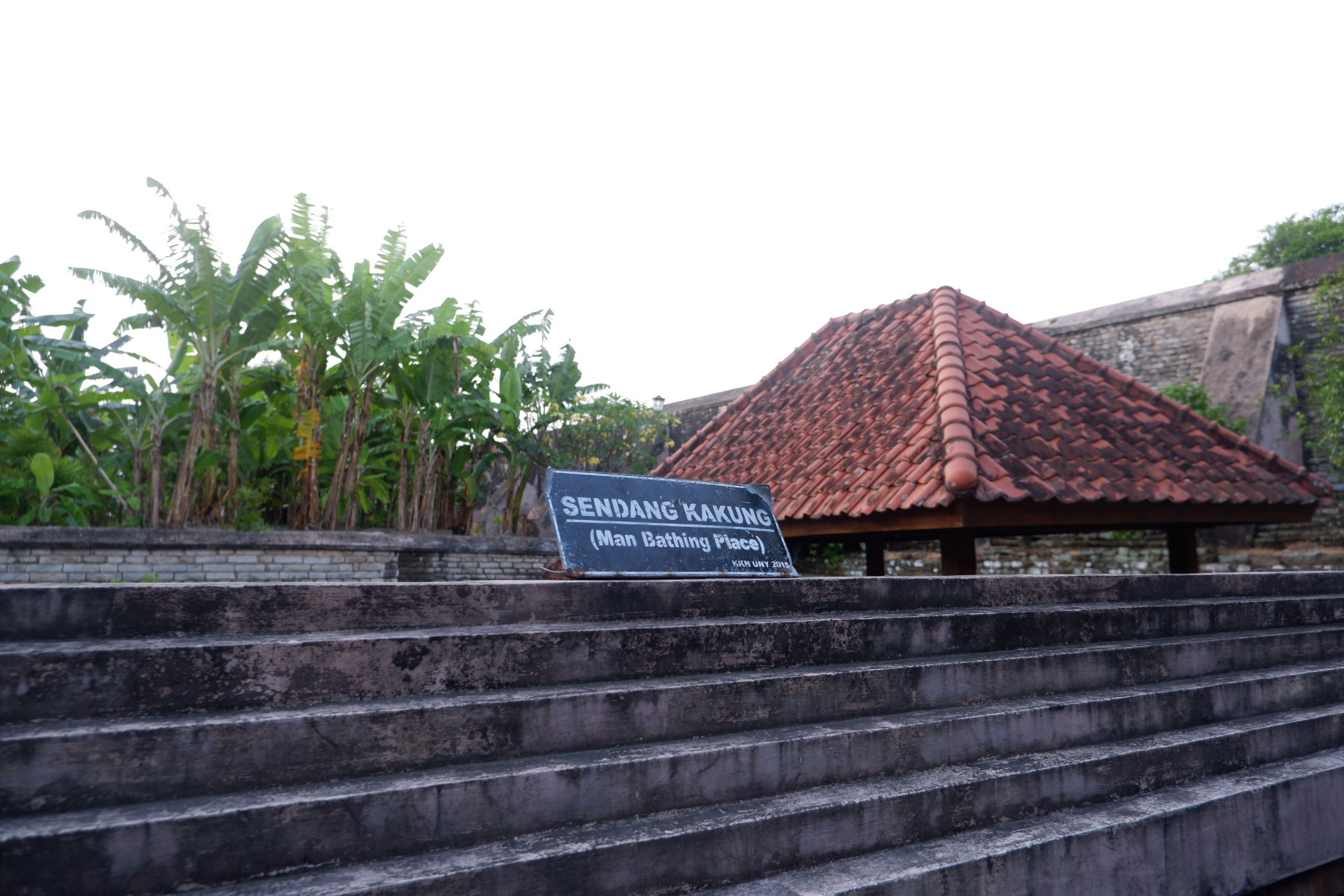
Sendang Kakung

Sendang Kakung (tampak dari luar pagar)

Pintu Masuk Sendang Putri

Kawasan Sendang Putri

Demikian perjalanan kita menyusuri Kompleks Makam Raja dan Masjid Gede Mataram di Kotagede. Catatan bagi teman-teman yang ingin berziarah ke pemakaman, harap memperhatikan waktu dan pakaian saat berkunjung karena ada aturan khusus untuk memasuki area makam.

Selain itu, terdapat beberapa situs bersejarah lain seperti situs Cepuri, situs Watu Gilang, kompleks perumahan Between Two Gates dan juga kerajinan Perak di wilayah Kotagede ini.


Well, sekian jalan-jalan kali ini.. Spesial thanks to Mbak Nura & Mas Hastangka yang sudah menemani blusukan di Kompleks ini. See you di perjalanan selanjutnya.... 😉

Salam,


Share
Tweet
Pin
Share
22 comments

In the midst of the hectic activities of the PKTBT CASN BRIN 2022, I took my weekend time to meet my senior (while studying at IPB) who happened to return to Yogyakarta. Because I took the CL (Commuter Line) from home, so I requested a meet up place not far from Yogyakarta (Tugu) Station, which is around Malioboro.

It turns out that Malioboro is not that narrow. Here I want to share the interesting places in Malioboro other than the shopping center. Come on, let's follow the story to the end, okay?


MALIOBORO

Kawasan Malioboro
The Gate Separated Each Zone in Malioboro

Right from the exit gate of Yogyakarta (Tugu) Station, we can see many interesting places for tourists. Let's call one of them is Selasar Malioboro which is a gathering place for angkringan traders. I have discussed this article about Selasar Malioboro and its Angkringan in full in the post Strolling Around Malioboro, A Major Shopping Street in Yogyakarta. 

pedagang kaki lima di teras malioboro
Teras Malioboro 1

The new face of Malioboro that is different from the 2019s is the presence of benches, hand washing facilities, and a dividing gate between zones along the sidewalk on Malioboro street. One more thing, the street vendors who originally sell their products crowded the sidewalks, starting February 1, 2022, were moved to Teras Malioboro 1 and Teras Malioboro 2. The Malioboro sidewalk is now more convenient for tourists and pedestrians who deliberately follow this road to the zero point of Yogyakarta.


CHINATOWN: KETANDAN VILLAGE

Malioboro's Chinatown: Kampung Ketandan
The Gate of Chinatown area in Ketandan Village

Right after Malioboro Mall, we will find a gate with Chinese-style architecture on the left side of the road. This is the gate of Kampung Ketandan, a Chinatown area (Chinatown) in Yogyakarta. Based on information from the Yogyakarta City Government News Portal, Ketandan village is a witness of the acculturation between Chinese culture, the Palace and Residents of Yogyakarta since the Dutch colonial era. Every Chinese New Year celebration, the Ketandan Village organizes the Yogyakarta Chinese Culture Week. Cultural ornaments and a lion dance festival will enliven the atmosphere in the area.


BERINGHARJO MARKET

Beringharjo, the oldest market in Yogyakarta
Entrance Gate of Beringharjo Market

If we continue our journey to the south, we will find Beringharjo Market which is the oldest and historic market in Yogyakarta. Reporting from Yogyes.com, at first the Beringharjo Market was a banyan forest that was used as a place for buying and selling by local residents after the establishment of the Ngayogyakarta Hadiningrat Palace in 1758. The name of this banyan tree was later immortalized as the name of the market, namely Beringharjo (bering = banyan, harjo = welfare), with the hope that this market will become a source of prosperity.

mainan tradisional pasar beringharjo
Traditional Toys Trader at Beringharjo Market

At Beringharjo Market, sellers peddle various traditional snacks such as brem madiun, krasikan, green bean bakpia, hung kwe, nagasari, ting-ting, etc. In addition, this market also sells various types of batik and some traders offer traditional toys.


GEDUNG AGUNG YOGYAKARTA

Main Building of Gedung Agung Yogyakarta

Right in front of the Vredeburg Fort Museum, there is a historical building called the Gedung Agung. This building was built since the Dutch colonial era, then used by the Japanese government during the colonial era, and was used by the Indonesian government after Indonesia's independence. History records the important role of Gedung Agung as the Presidential Palace (presidential residence) during the Second Dutch Military Aggression when the Indonesian government moved from Jakarta to Yogyakarta. According to the Ministry of State Secretariat of the Republic of Indonesia, the name Gedung Agung was given because of its function to welcome dignitaries of the state (gedung means building, agung means great or dignity).


POINT OF 0 KM YOGYAKARTA

March 1st General Offensive Monument

Continuing the journey to the south, we will find the 0 Km point, which is an intersection in the center of Yogyakarta City which brings together Jl Ahmad Dahlan, Jl Senopati, Jl Ahmad Yani, and the road leading to the north square. In this place you will easily see the old Dutch-style post office building, the BNI Bank office and the monument to the March 1 general attack.

0 km point and BNI Bank building

The 0 km point of Yogyakarta is often used as the center for holding big events such as music concerts, etc. This place looks very beautiful especially at night. Many tourists just take a walk and capture the moment in this place.


THE NORTH SQUARE

wedang ronde
Wedang Ronde (A Javanese Traditional Beverage)

From the 0 Km point of Yogyakarta, we continued our journey to the south. Right after crossing the intersection, on the left there are vendors selling traditional snacks, one of which is wedang ronde. We stopped for a moment while enjoying the wedang ronde at the small stall.

Sonobudoyo Museum 

Not far from the stall, there is the Sonobudoyo Museum which manages objects that have a scientific culture. If you are a humanist, it is a worth in taking the time to stop by this museum.

Kawasan Malioboro dari Alun-alun Utara
Point 0 Km Yogyakarta from North Square

Istana Yogyakarta
Yogyakarta Palace from North Square

Next, we will pass through a gate that leads us to the north square of the Yogyakarta Palace. In this square there are three pairs of banyan trees planted within the boundary fence. From this square, we can clearly see the Yogyakarta Palace from the front side.

KAUMAN GRAND MOSQUE

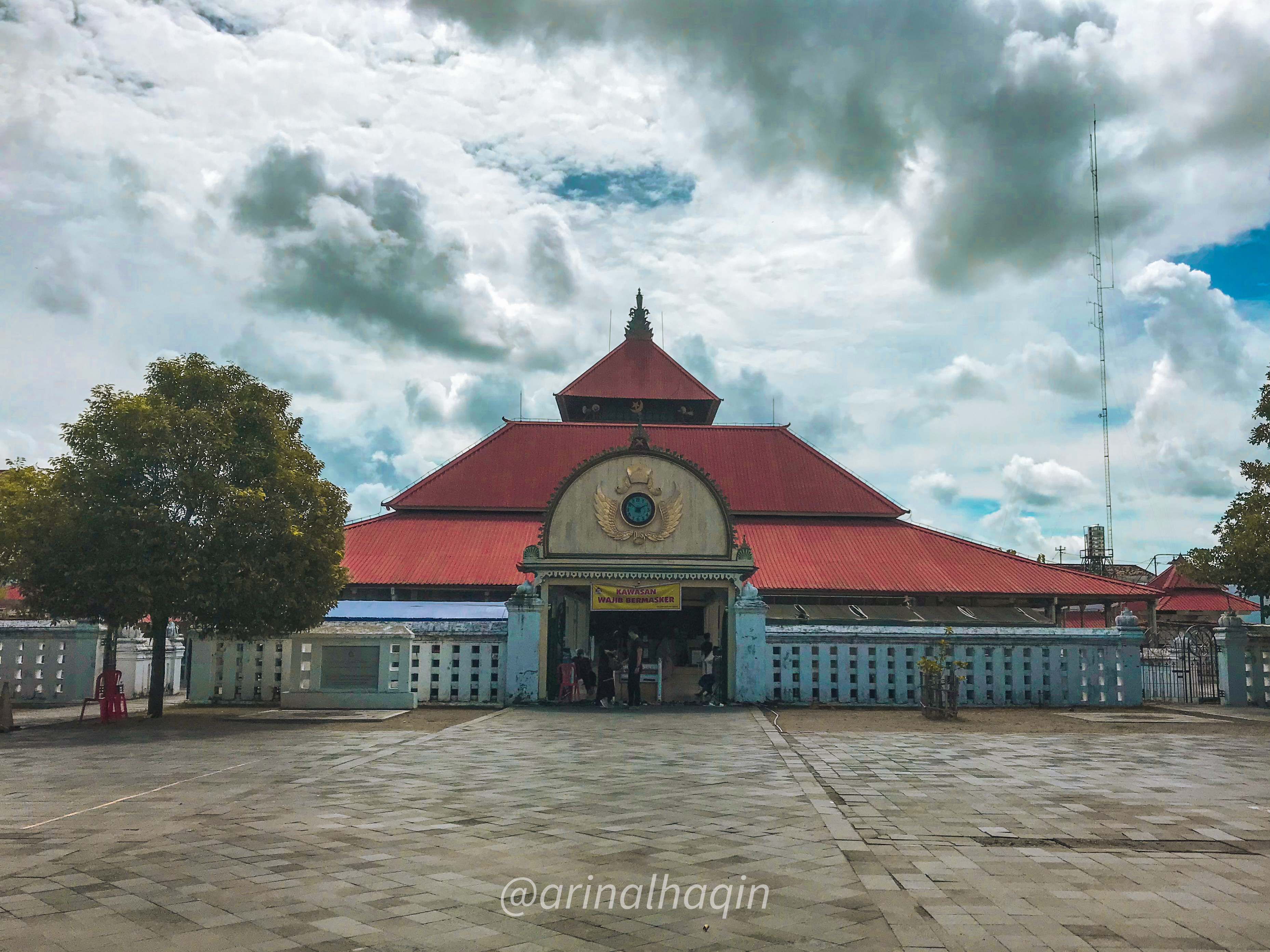
Yogyakarta Palace's Grand Mosque Kauman
Kauman Grand Mosque in Yogyakarta


Continuing our journey to the west, we walked from the square to The Grand Mosque Kauman. This mosque was built by Sri Sultan Hamengku Buwono I as one of the completeness of the Ngayogyakarta Hadiningrat Kingdom as well as the spatial layout of other Javanese kingdoms where the mosque is always located to the west of the palace.

Masjid Agung Kauman Yogyakarta
The name of the Great Mosque of Kauman

The name Kauman itself is very familiar to me because it is a historical place for the establishment of the Muhammadiyah organization. Unfortunately I didn't have much time to go around Kauman village to find the Langgar Alit (a Javanese type of small mosque) which was built by KH Ahmad Dahlan. Hopefully next time I can explore this area more widely.

Thus, I walked through historical buildings in Yogyakarta, especially from Malioboro to the Yogyakarta Palace. This article is also available in Indonesian and Japanese version. See you on the next walks.

See you,


Notes:

Maybe readers are wondering why I always use the name "Tugu" when writing Yogyakarta Station. So, in the center of Yogyakarta, there are 2 big stations which used to be called "Tugu" and "Lempuyangan" stations. When purchasing tickets at PT KAI, these two stations were named Yogyakarta Station with the interpretation being Tugu Station for business/executive tickets and Lempuyangan for economy tickets. However, at this time, Lempuyangan station is commonly referred to as Lempuyangan Station without including the name Yogyakarta, and Yogyakarta station is more specifically referred to as Tugu Station. So, if someone mentions "Tugu Station" it means "Yogyakarta Station".

Share
Tweet
Pin
Share
38 comments

This time,  I will share my trip to Malioboro (Special Region of Yogyakarta) that actually not so far away from my hometown. Because I visit there often, I never have serious effort to take proper documentations 😅

I have never consider Malioboro as a place that would attract tourist visitor because I often visit this place at least three times in a year. One day I moved to Bogor for my study, and my university friends eagerly want to visit Malioboro on the way back of our study tour. Is Malioboro that famous? I surprised.

Malioboro is very famous location in the heart of Yogyakarta City. It just southern part right after the railway of Yogyakarta (Tugu) Station. To get here, you can take direct train from other city that stop at Yogyakarta (Tugu Station) or take an airport train (kereta bandara) from Yogyakarta International Airport that bound for Tugu Station. At the exit gate, walks to the eastern direction for 5 minutes then you will find a street named Malioboro.

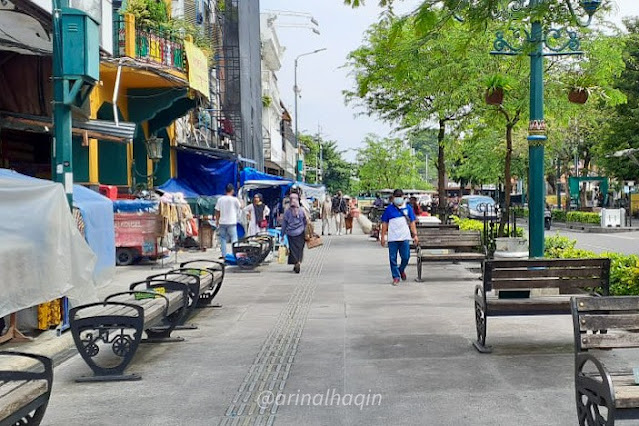
Malioboro's Pedestrian Strees
Pedestrian Street in Malioboro

Yes, actually Malioboro is name of a street. However, you can find a lot of street vendors that sell clothes, herbs (jamu), souvenirs, etc. You will find a lot of stuff is sold with high price, but I tell you the secret that you should bargain at least 1/3 times from the initial price. That's how it works.

You can also find traditional stalls (angkringan or hik) that sell local foods. Enjoying angkringan foods with black coffee may be the best way to feel the local wisdom. If you are looking for Gudeg (the jackfruit curry, the specialty food of Yogyakarta), it's better to look for a restaurant. 

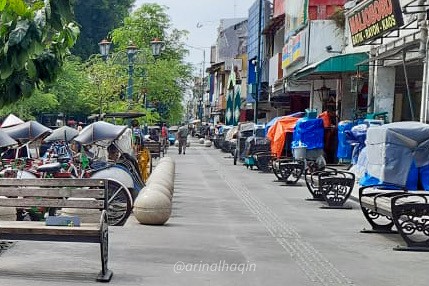
Malioboro's Pedestrian Street 2
Other side of pedestrian where becak make a stop

You may wonder why there are a lot of pedicab or cycle rickshaw? The locals call it becak. It is human-drawn carriage that several years ago still popular in Indonesia. Recently the number of becak decreasing, even I forgot when the last time I used this kind of transportation. I am not sure what the reason, may be because the increasing of bike taxi or ojeg online popularity. But here, you can still find some of them.

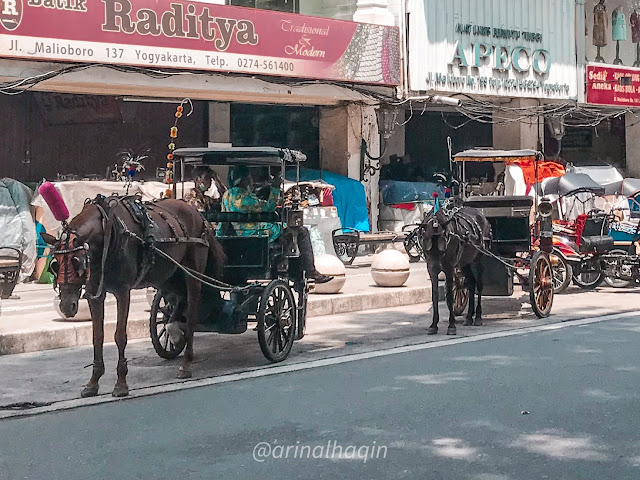
Kereta Kuda in Malioboro
Kereta kuda that waiting for the customers

Every time I visit Malioboro, I interested in the horse-drawn carriage or kereta kuda in Bahasa Indonesia and locals call it in Javanese Language as andong, dokar or bendi. The horse-drawn carriage is one type of traditional transportation in Indonesia, I used this transportation in my home town when I was a kindergarten and elementary student. Currently, it is only used for tourism purpose.

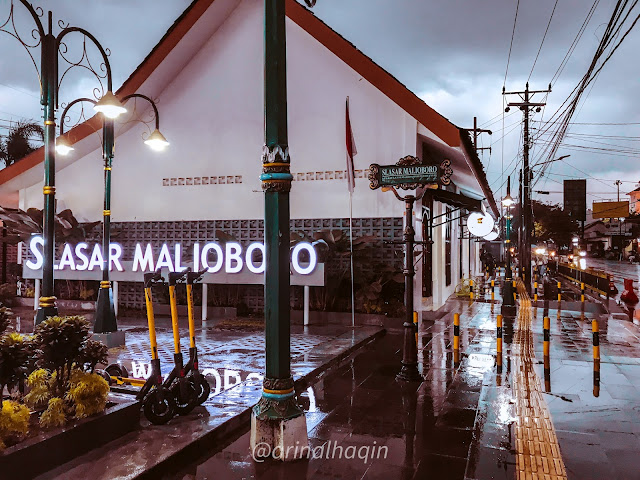
Selasar Malioboro

Selasar, in bahasa, is a porch or veranda (some are not roofed). It also the lowest hall where the people or low-ranking employees face. However, in home property, selasar is a room, aisle or a path that connects one point to another in a building, for example from one door to another. Refers to the position of station, selasar Malioboro and Malioboro itself, I wonder that the last definition is the most suitable.

Selasar Malioboro is built by PT Kereta Api Indonesia (PT KAI, an Indonesian Railway Company) as a showroom for the small micro and medium enterprises and an area for local cultural arts performances. Its also integrating Yogyakarta (Tugu) Station with Malioboro Street tourist area. This is quite new place that available for public started from March 2021.

Selasar Malioboro
The building of Selasar Malioboro

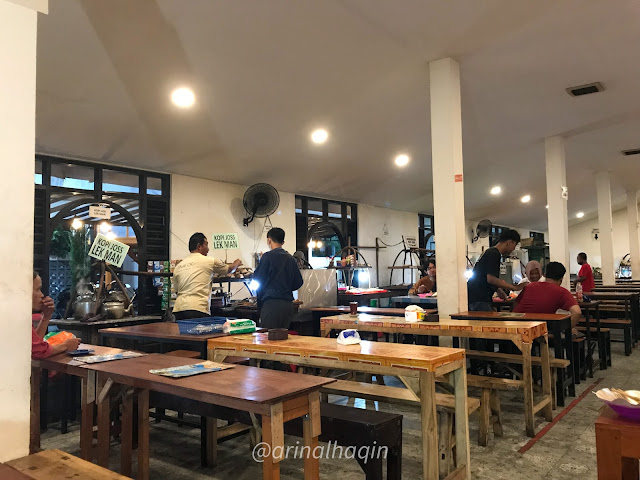
What is inside Selasar Malioboro? I know you must be impatient to find out. There are local people that sell traditional food and coffee called as "Angkringan". In my hometown (near Solo) this stall is more familiar with the name of "Hik", even actually they are the same things. Angkringan normally open after 6 p.m., but Selasar Malioboro open from early morning.

Angkringan in Selasar Malioboro
Table and bench to enjoy the food

Now, I will explain you how Angkringan works.

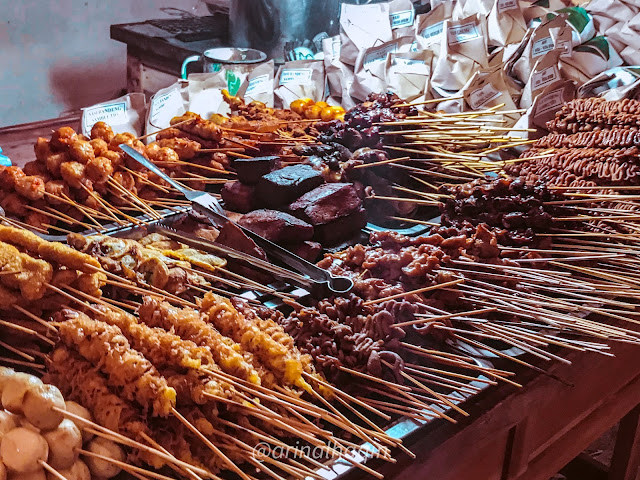
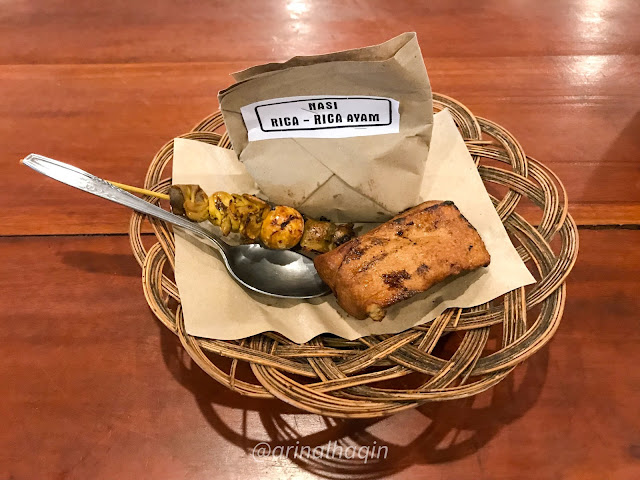
There are several carts that displaying diverse food. Ask for the plate from the merchant, then choose food you want to eat. This time I choose nasi rica-rica ayam (rice with spice mixture chicken), satay of quail egg mixed with chicken organ, and tahu bacem (tofu boiled with brown sugar). Then, ask the merchant to warm your food. Wait in the bench, the merchant will bring back to you when the food are ready.

Angkringan's food
Foods displayed above the cart

Because the concept of angkringan is to eat what you want while have conversation with your friends, you can request more of food if the conversation hasn't finish or you are still hungry. You will pay the whole order after you finish your business there. The price is not really expensive. I pay Rp 12.000 for the food I ordered.

Angkringan's food
Grilled food I ordered

I will tell you the most favorite drink in angkringan that famously known as Kopi Joss. It is a typical Yogyakarta coffee served with hot charcoal. Once made, the black coffee is immediately mixed with pieces of charcoal that are still smoldering so that it makes a 'josss' sound. This voice later became the origin of the name Kopi Joss. This coffee is usually sold at angkringan-angkringan in Yogyakarta. A cup of jos coffee costs around 5.000 rupiah. You should give a try if you are a big fan of coffee.

Kopi Joss
Kopi Joss (picture taken from travel.tempo.co)

Above is my story about Malioboro and angkringan in Yogyakarta. I have more story about my visit in Taman Sari that I will post later. 

See you in the next travel story.

Share
Tweet
Pin
Share
No comments
Older Posts

Total Pageviews

FLAG COUNTER

Flag Counter

About me

About Me

I am Izza, a plant scientist who likes traveling. Mostly I post about cultural exchanges and my travel experiences to historical sites and natural sceneries.

My Snapshots

blog list

  • Pejuang Pena
  • Satsuma Career
  • Satsumakan

Blog Archive

  • ▼  2023 (1)
    • ▼  February 2023 (1)
      • Kecerdasan Buatan yang Bermanfaat buat Traveler
  • ►  2022 (19)
    • ►  October 2022 (1)
    • ►  August 2022 (1)
    • ►  June 2022 (1)
    • ►  May 2022 (1)
    • ►  April 2022 (5)
    • ►  March 2022 (6)
    • ►  February 2022 (3)
    • ►  January 2022 (1)
  • ►  2021 (5)
    • ►  December 2021 (2)
    • ►  November 2021 (1)
    • ►  March 2021 (2)
  • ►  2020 (3)
    • ►  November 2020 (1)
    • ►  July 2020 (1)
    • ►  March 2020 (1)
  • ►  2019 (2)
    • ►  October 2019 (1)
    • ►  May 2019 (1)
  • ►  2018 (2)
    • ►  November 2018 (1)
    • ►  April 2018 (1)
  • ►  2015 (3)
    • ►  October 2015 (3)

Followers

BloggerHub

BloggerHub Indonesia

Blogger perempuan

Blogger Perempuan

1 minggu 1 cerita

1minggu1cerita

Created with by ThemeXpose