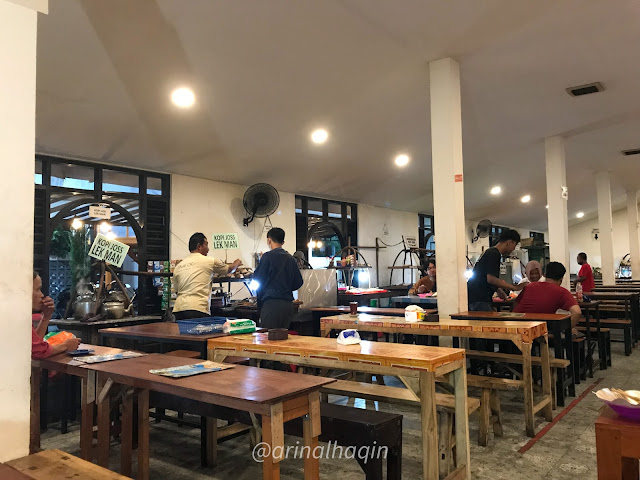
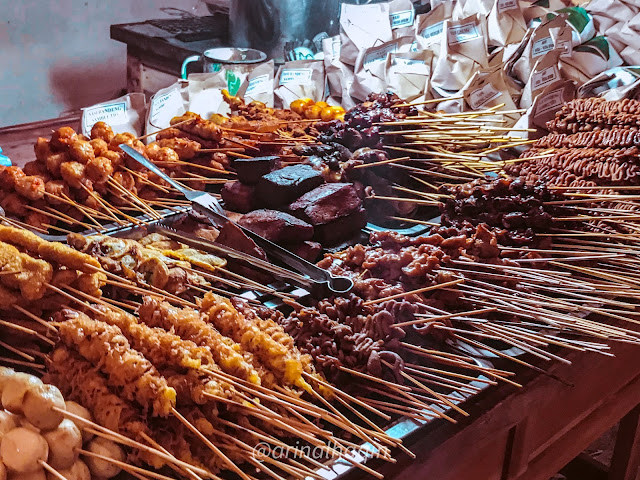
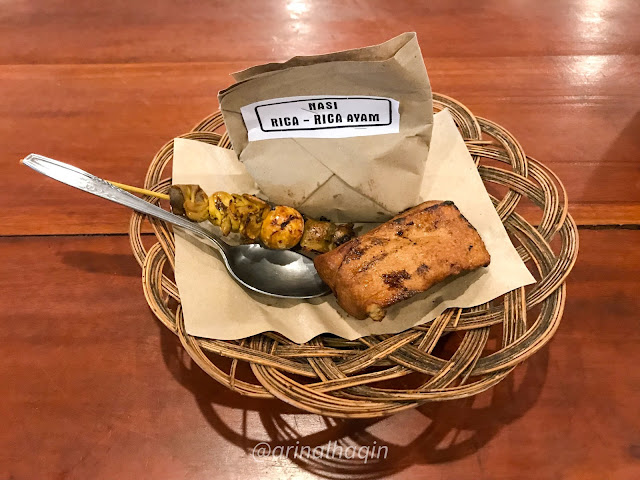
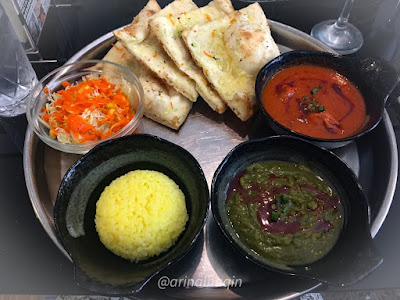
In the midst of the hectic activities of the PKTBT CASN BRIN 2022, I took my weekend time to meet my senior (while studying at IPB) who happened to return to Yogyakarta. Because I took the CL (Commuter Line) from home, so I requested a meet up place not far from Yogyakarta (Tugu) Station, which is around Malioboro.
It turns out that Malioboro is not that narrow. Here I want to share the interesting places in Malioboro other than the shopping center. Come on, let's follow the story to the end, okay?
MALIOBORO
 |
| The Gate Separated Each Zone in Malioboro |
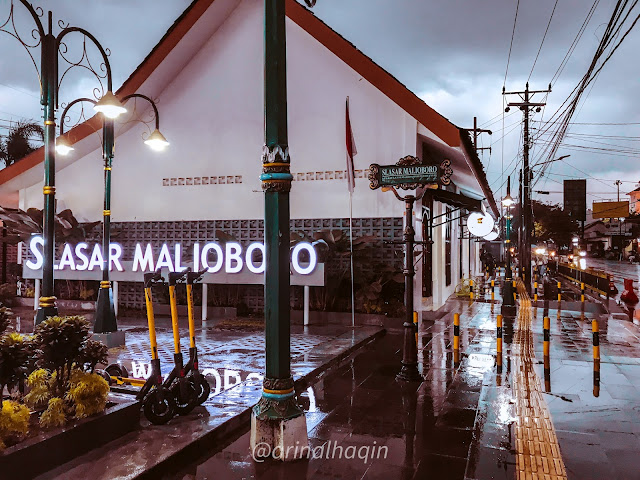
Right from the exit gate of Yogyakarta (Tugu) Station, we can see many interesting places for tourists. Let's call one of them is Selasar Malioboro which is a gathering place for angkringan traders. I have discussed this article about Selasar Malioboro and its Angkringan in full in the post Strolling Around Malioboro, A Major Shopping Street in Yogyakarta.
 |
| Teras Malioboro 1 |
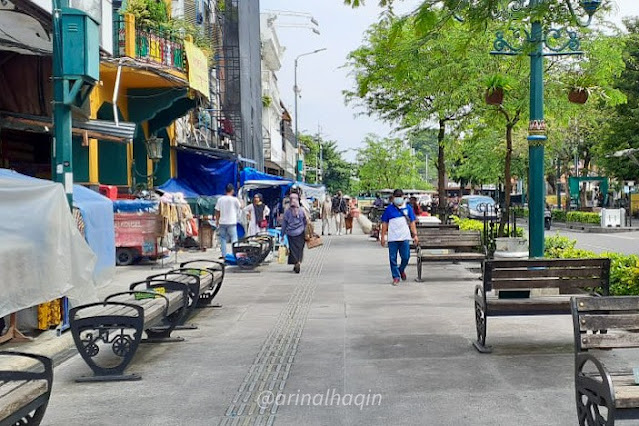
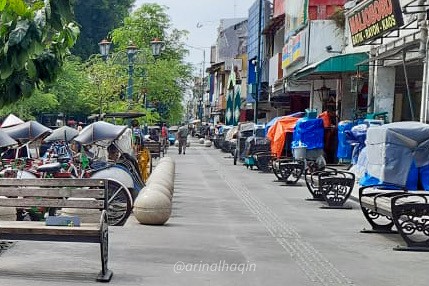
The new face of Malioboro that is different from the 2019s is the presence of benches, hand washing facilities, and a dividing gate between zones along the sidewalk on Malioboro street. One more thing, the street vendors who originally sell their products crowded the sidewalks, starting February 1, 2022, were moved to Teras Malioboro 1 and Teras Malioboro 2. The Malioboro sidewalk is now more convenient for tourists and pedestrians who deliberately follow this road to the zero point of Yogyakarta.
CHINATOWN: KETANDAN VILLAGE
 |
| The Gate of Chinatown area in Ketandan Village |
Right after Malioboro Mall, we will find a gate with Chinese-style architecture on the left side of the road. This is the gate of Kampung Ketandan, a Chinatown area (Chinatown) in Yogyakarta. Based on information from the Yogyakarta City Government News Portal, Ketandan village is a witness of the acculturation between Chinese culture, the Palace and Residents of Yogyakarta since the Dutch colonial era. Every Chinese New Year celebration, the Ketandan Village organizes the Yogyakarta Chinese Culture Week. Cultural ornaments and a lion dance festival will enliven the atmosphere in the area.
BERINGHARJO MARKET
 |
| Entrance Gate of Beringharjo Market |
If we continue our journey to the south, we will find Beringharjo Market which is the oldest and historic market in Yogyakarta. Reporting from Yogyes.com, at first the Beringharjo Market was a banyan forest that was used as a place for buying and selling by local residents after the establishment of the Ngayogyakarta Hadiningrat Palace in 1758. The name of this banyan tree was later immortalized as the name of the market, namely Beringharjo (bering = banyan, harjo = welfare), with the hope that this market will become a source of prosperity.
 |
| Traditional Toys Trader at Beringharjo Market |
At Beringharjo Market, sellers peddle various traditional snacks such as brem madiun, krasikan, green bean bakpia, hung kwe, nagasari, ting-ting, etc. In addition, this market also sells various types of batik and some traders offer traditional toys.
GEDUNG AGUNG YOGYAKARTA
 |
| Main Building of Gedung Agung Yogyakarta |
Right in front of the Vredeburg Fort Museum, there is a historical building called the Gedung Agung. This building was built since the Dutch colonial era, then used by the Japanese government during the colonial era, and was used by the Indonesian government after Indonesia's independence. History records the important role of Gedung Agung as the Presidential Palace (presidential residence) during the Second Dutch Military Aggression when the Indonesian government moved from Jakarta to Yogyakarta. According to the Ministry of State Secretariat of the Republic of Indonesia, the name Gedung Agung was given because of its function to welcome dignitaries of the state (gedung means building, agung means great or dignity).
POINT OF 0 KM YOGYAKARTA
 |
| March 1st General Offensive Monument |
 |
| 0 km point and BNI Bank building |
The 0 km point of Yogyakarta is often used as the center for holding big events such as music concerts, etc. This place looks very beautiful especially at night. Many tourists just take a walk and capture the moment in this place.
THE NORTH SQUARE
 |
| Wedang Ronde (A Javanese Traditional Beverage) |
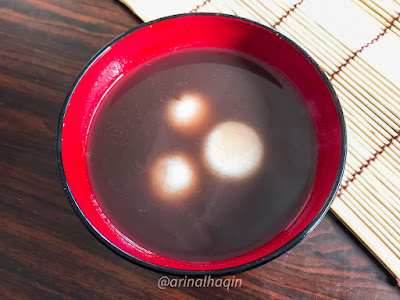
From the 0 Km point of Yogyakarta, we continued our journey to the south. Right after crossing the intersection, on the left there are vendors selling traditional snacks, one of which is wedang ronde. We stopped for a moment while enjoying the wedang ronde at the small stall.
 |
| Sonobudoyo Museum |
Not far from the stall, there is the Sonobudoyo Museum which manages objects that have a scientific culture. If you are a humanist, it is a worth in taking the time to stop by this museum.
 |
| Point 0 Km Yogyakarta from North Square |
 |
| Yogyakarta Palace from North Square |
KAUMAN GRAND MOSQUE
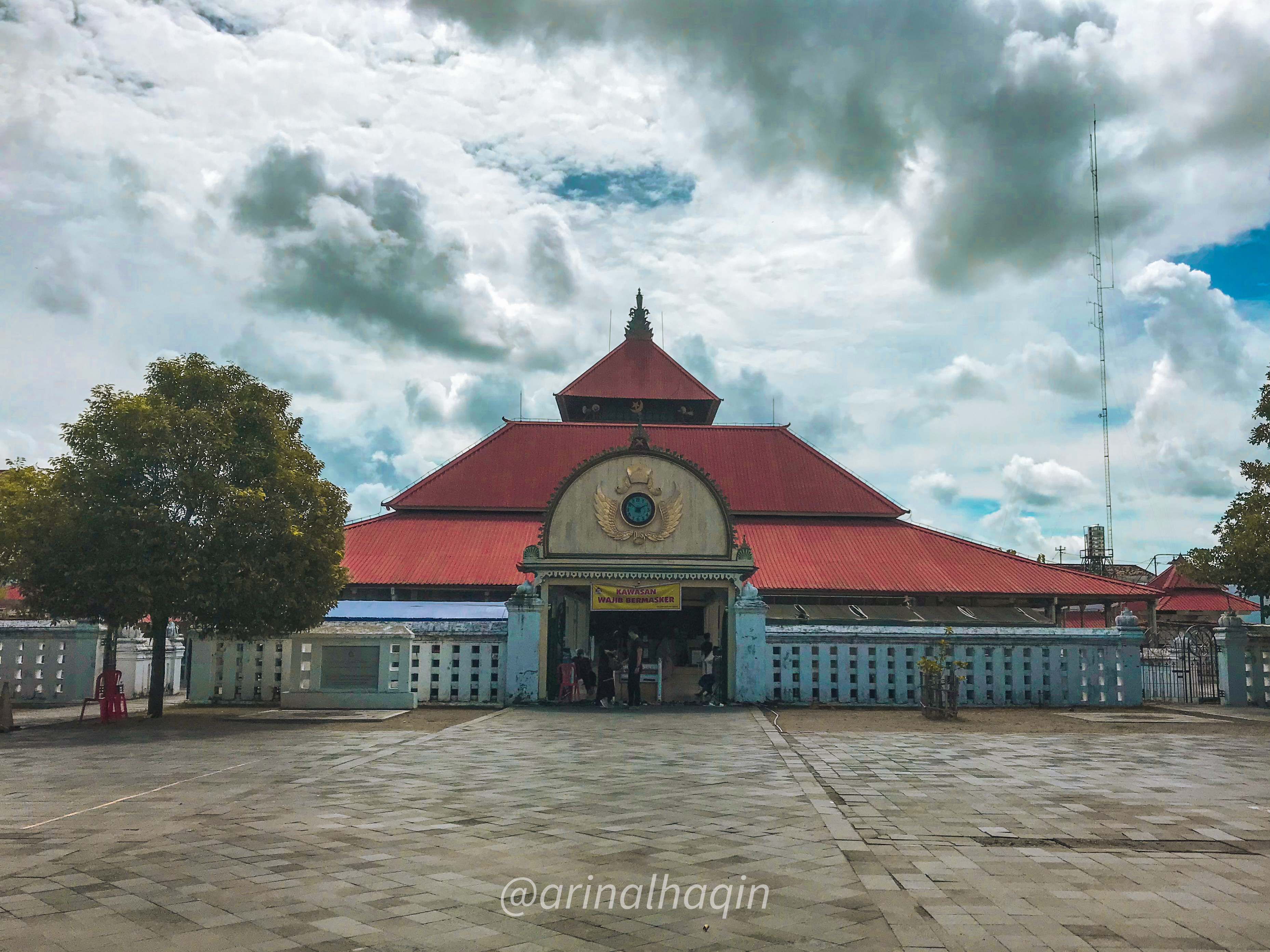 |
| Kauman Grand Mosque in Yogyakarta |
 |
| The name of the Great Mosque of Kauman |

Notes:
Maybe readers are wondering why I always use the name "Tugu" when writing Yogyakarta Station. So, in the center of Yogyakarta, there are 2 big stations which used to be called "Tugu" and "Lempuyangan" stations. When purchasing tickets at PT KAI, these two stations were named Yogyakarta Station with the interpretation being Tugu Station for business/executive tickets and Lempuyangan for economy tickets. However, at this time, Lempuyangan station is commonly referred to as Lempuyangan Station without including the name Yogyakarta, and Yogyakarta station is more specifically referred to as Tugu Station. So, if someone mentions "Tugu Station" it means "Yogyakarta Station".